To answer the second question first, pitch correction means to use software to literally change the pitch of notes played or sung. If the guitars and bass are all playing an E note, but the vocals are slightly sharp or flat, the engineer can go back afterward and adjust the pitch of that note right onto the E.
Quantization is the process of taking a beat or note and shifting it in time slightly to line it up with the metronome beat. In other words, if a drummer hits the snare drum a few milliseconds off of the metronome beat, the engineer can move the drum hits that are off and put them right on the count (you know, when you count “1, 2, 3, 4, 1, 2, 3, 4” and you place the note or beat right on the number). I hope that this makes sense….
So, now that we know what that stuff is, let’s discuss where I land on this. Do I believe that this stuff (the corrections in post-production) is bad? No, not at all. They just aren’t how I learned to do things. I started recording before pitch correction was a thing, and we couldn’t just nudge notes with ease like we can now with modern digital audio workstations. I never used those techniques in the past, and I am just doing the same thing as I did in the 1990s. Is it wrong? No. It’s just not what this project is about.
I know what you’re thinking: “The singer in The Schnooks sounds like he’s not hitting all of the notes, so don’t you want to fix that?” Good question. I actually just got a comment from a listener in Quito, Ecuador who praised the track as an “incredible song” but added, “la voz se siente un poco desafinada te recomiendo mejorar eso” (the voice feels a bit out of tune, I recommend improving that). To make a long story short, The Schnooks’ singer (me) is actually not a “singer” and is aware that those used to hearing perfectly pitched vocals (via correction, usually) may find someone not using it a bit jarring.
To those people, I beg you not to listen to Tom Waits, Les Claypool, Joe Strummer from The Clash (the “Should I Stay or Should I Go” and “Rock the Casbah” band), Lou Reed, Bon Scott (and Brian Johnson, both of AC/DC), Nick Cave, Page Hamilton, damn near every punk act, Lemmy Kilmister, and so on.
They are all singers in successful bands, and they were not always perfectly in tune, either. Most of them didn’t have that technology to “auto-tune” stuff, and their audiences don’t care about that, either. It’s not about the technical precision of the vocals, but about the human feel and emotion that they exude. Nowadays, most people are trained to hear perfectly pitched vocals. Even highly skilled singers use it, and I believe that it is taking the humanity out of the whole song.
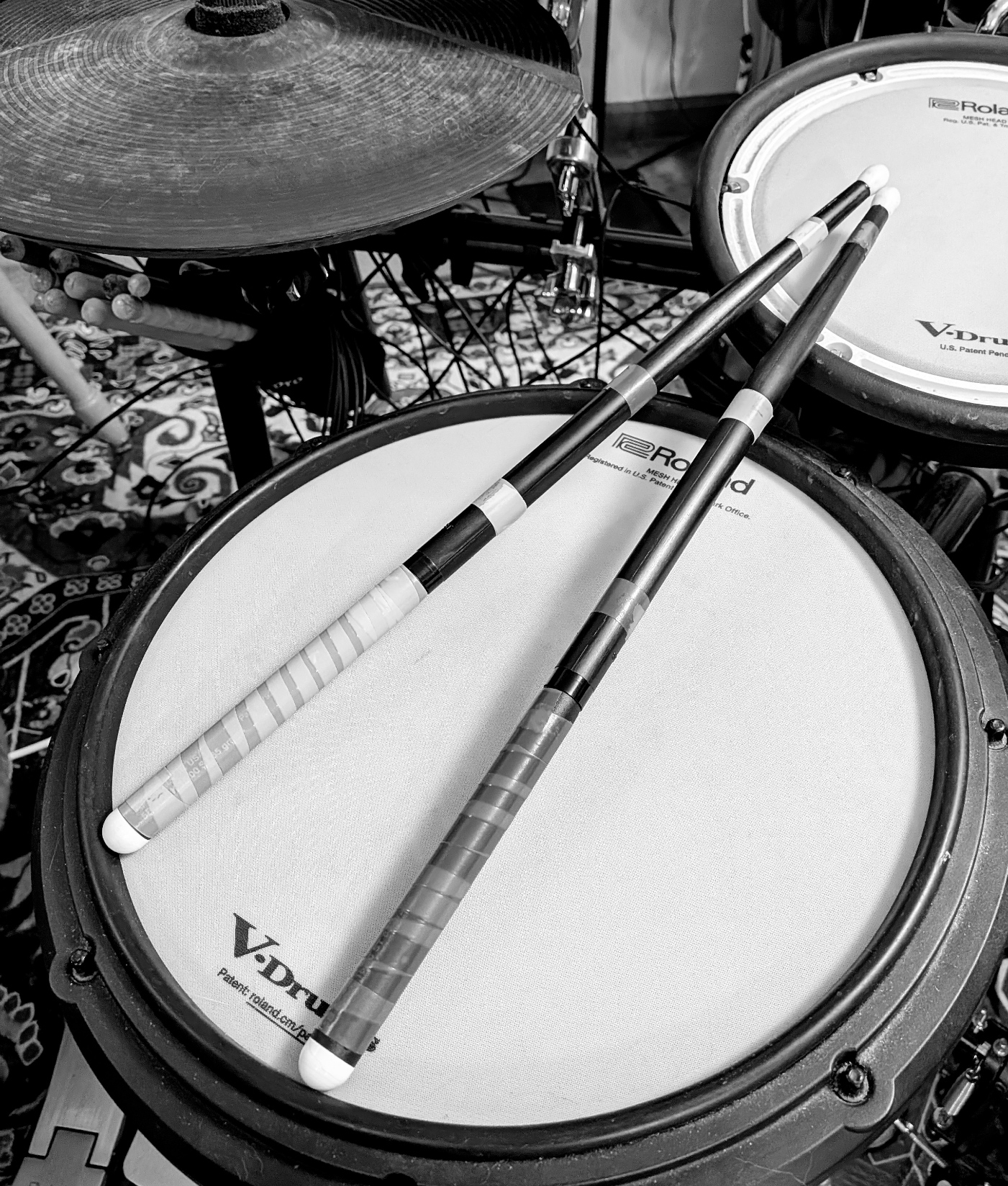
As far as quantization is concerned, that was near impossible back in the tape days (and, yes, I did have a cassette tape multitrack recorder at one time). If the drummer was too far off, the part was typically played over until it was corrected. But if the beat is off a millisecond or three, that’s not necessarily a bad thing. That slight push and pull usually adds to the overall experience. But, again, we are all trained to hear the kick drum and the snare drum hit right on that beat, each and every time. That’s when people start sounding mechanical in their playing. Is that wrong? Not if that’s what they like (and a good segment of the listenership today expects it).
Again, it’s not my thing. I will admit that if a single note or beat is slightly out of place, I will go in and fix that. But if I am too far out of time, I just do it over until I get it right like it used to be done. Neil Peart, John Bonham, Keith Moon, the Appice Brothers, Mitch Mitchell, Karen Carpenter, Gene Krupa, Buddy Rich… All of them are considered some of the best drummers in modern western music. None of them used quantization back then, and no matter how skilled they were, none of them actually had perfect timing. I’m not saying that I am anywhere near their skill level (not even close), but I do things the same way they did in the 60s, 70s, 80s, and early 90s.
So, am I against the use of those tools? Only for me. Can the sound of uncorrected, raw music be jarring to those who don’t listen to classic rock (from the 70s, not the 90s… jeez!)? Absolutely. But I see that as their problem, not mine. Sure, with an attitude like that, I won’t become popular and be heard on your local Q102 station. But I will also feel better about the music that this project puts out. And think of it this way: I write this music for me, and I decided to share it with everyone else. You can either listen to it or not. You can like it or not. And you can agree with my philosophy, or you can think it’s BS. That is up to you.
Regardless, I appreciate you listening and taking the time to comment. Thank you, everyone.